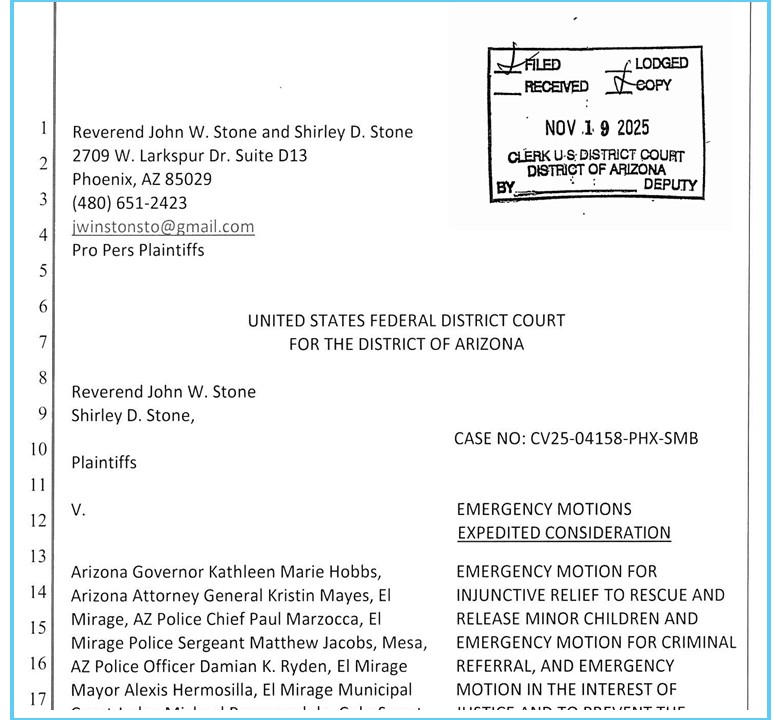
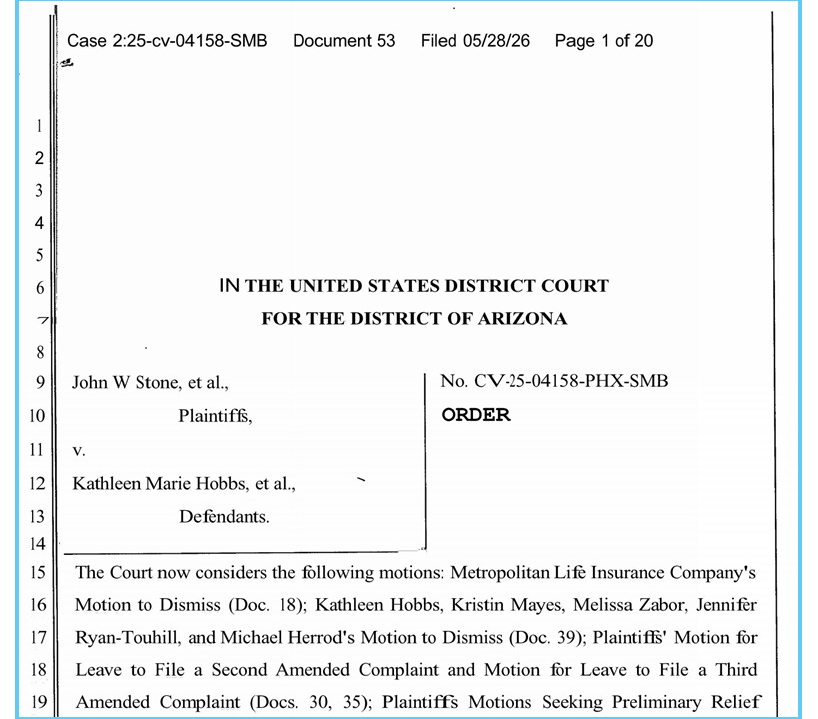
We have spent 5,000 hours doing the work the police refused to do. We have uncovered a 'Counterfeit Order' enterprise where the Law is bartered for political favors. Now, WE THE PEOPLE must decide: Is the Court a Temple of Justice or a RICO Enterprise?
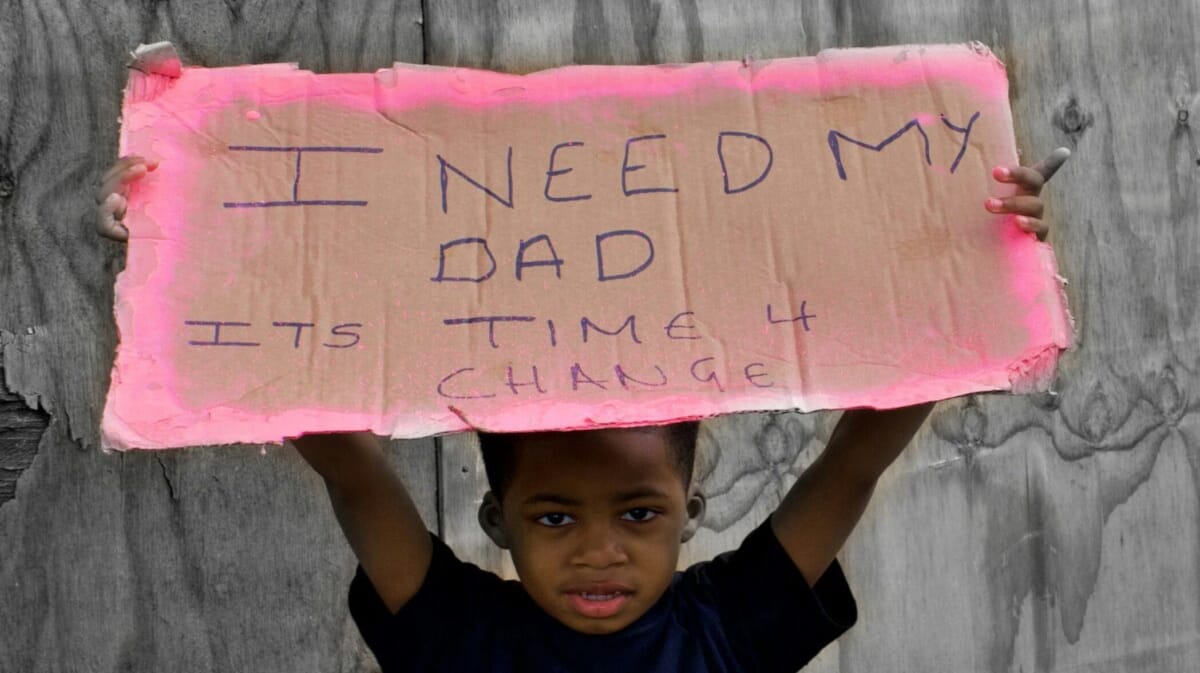
The concept of children’s civil rights is essential for understanding the inherent rights that every child possesses, akin to those of adults. In the context of the United States, the framework for these rights is deeply embedded within the Constitution and various legal precedents. This signifies that children are not just passive recipients of protection; they are individuals with distinct rights that demand respect and enforcement by society.
Historically, the recognition of children’s rights has evolved substantially. Initially, children were often viewed through a lens of guardianship and paternalism, where their needs and desires were secondary to those of adults. However, the shift towards acknowledging children as rights-bearing individuals has gained momentum, especially in light of international agreements such as the United Nations Convention on the Rights of the Child (UNCRC). This treaty emphasizes the need for legal structures that recognize the agency and voices of children, responding to their specific vulnerabilities.
In the United States, various constitutional amendments interplay to safeguard the rights of children, including the First Amendment, which guarantees freedoms concerning speech, religion, and assembly. Additionally, the Fourteenth Amendment plays a crucial role, ensuring due process and equal protection under the law, thus shaping the landscape for children’s civil liberties. Understanding these legal protections is fundamental to advocating for children’s rights and ensuring that their voices are not only heard but also integrated into legislative and educational frameworks.
As we delve deeper into this multifaceted topic, it is crucial to recognize that children’s civil rights encompass a range of issues, from educational rights to protection from abuse and exploitation. Each of these areas requires careful examination to understand how they connect back to the constitutional rights afforded to every child in the nation.
The Constitutional Basis for Children’s Rights
In the United States, the legal foundation for children’s rights resides within various constitutional amendments and statutes that afford protections to minors, recognizing their need for distinct consideration and safeguarding. While children do not possess the same legal status as adults, the Constitution ensures that they are entitled to fundamental rights, albeit interpreted through a lens reflecting their age and developmental needs.
One of the pivotal amendments is the Fourteenth Amendment, which guarantees due process and equal protection under the law. These provisions have been invoked to argue for the rights of minors, with landmark cases such as In re Gault (1967) illustrating this point. In this case, the Supreme Court ruled that juveniles have the right to notice of charges, the right to counsel, and the right to confront witnesses, thus extending the protections granted by the Fourteenth Amendment to children in the juvenile justice system.
Additionally, the First Amendment offers protections that are relevant to children’s rights, particularly regarding freedom of speech and expression. In Tinker v. Des Moines Independent Community School District (1969), the Supreme Court underscored that students do not shed their constitutional rights at the schoolhouse gate. This ruling reaffirms the notion that children, like adults, have the right to engage in peaceful protest and express their opinions, reinforcing their status as rights-bearing individuals.
Moreover, the family law domain, particularly the parental rights doctrine and the Children’s Act, emphasizes the right of children to a safe and nurturing environment. These legal frameworks recognize that children are entitled to protections that safeguard their well-being from abuse and neglect, highlighting the intersection of children’s rights and parental responsibilities.
Overall, the constitutional basis for children’s rights in the United States illustrates a growing recognition of their entitlements, establishing that minors possess inherent rights that should be protected under the law, much like adults.
The Right to Justice for Children
The right to justice for children is a fundamental aspect of their civil rights within the United States. Ensuring that children receive fair treatment and are able to seek justice is vital for their development and integration into society. The U.S. legal system has established various protections specifically designed to uphold these rights. One of the key components of this protection is the establishment of juvenile courts.
Juvenile courts serve a critical role in providing child-friendly legal processes that cater to the unique needs of children. Unlike adult courts, which can often be intimidating and complex for young individuals, juvenile courts are intended to be more flexible and understanding of a child’s circumstances. This system acknowledges that children may not fully comprehend legal proceedings and thus require additional support to navigate the justice process.
Furthermore, legal protections are grounded in both federal and state laws, ensuring that children’s constitutional rights are upheld. The U.S. Constitution includes guarantees of due process and equal protection which apply to minors. Additionally, various statutes, such as the Individuals with Disabilities Education Act (IDEA) and the Child Abuse Prevention and Treatment Act (CAPTA), provide further provisions that intersect with children’s rights within the justice system.
It is crucial to recognize that the right to justice for children not only encompasses their ability to be treated fairly in court but also extends to their right to receive appropriate resources, representation, and support. When children can access these provisions, they are more likely to feel empowered and secure, fostering a positive relationship with the legal system.
Overall, emphasizing the right to justice for children shapes a more equitable society and ensures that the legal system addresses their specific vulnerabilities, thus laying the groundwork for positive outcomes in their lives.
The Right to Be Heard and Participatory Rights
The recognition of children’s right to be heard and to participate in decision-making processes is an essential aspect of their civil rights in the United States. This principle is rooted in various international conventions, most notably the United Nations Convention on the Rights of the Child (UNCRC), which emphasizes that children should have the opportunity to express their views freely on all matters that affect them.
Article 12 of the UNCRC specifically outlines that children capable of forming their own views have the right to express those views in matters concerning them, and their opinions should be duly considered—a requirement that is particularly significant in contexts such as education, family law, and social services. While the United States has yet to ratify the UNCRC fully, its principles have significantly influenced discussions and policies surrounding children’s rights.
In the United States, various laws and policies have developed to support children’s participatory rights. For instance, the Individuals with Disabilities Education Act (IDEA) provides children with disabilities the right to participate in their own education plans. Furthermore, several state laws and local initiatives have emerged that aim to incorporate children’s voices into procedures that directly impact them, such as custody hearings and educational policies.
Listening to children is not merely a legal obligation; it has profound implications for their development and well-being. When children are included in decision-making processes, it fosters their sense of agency and responsibility, enhancing their confidence and social skills. Moreover, evidence suggests that when children’s perspectives are considered, the resultant decisions tend to be more effective and reflective of the actual needs of the youth they impact.
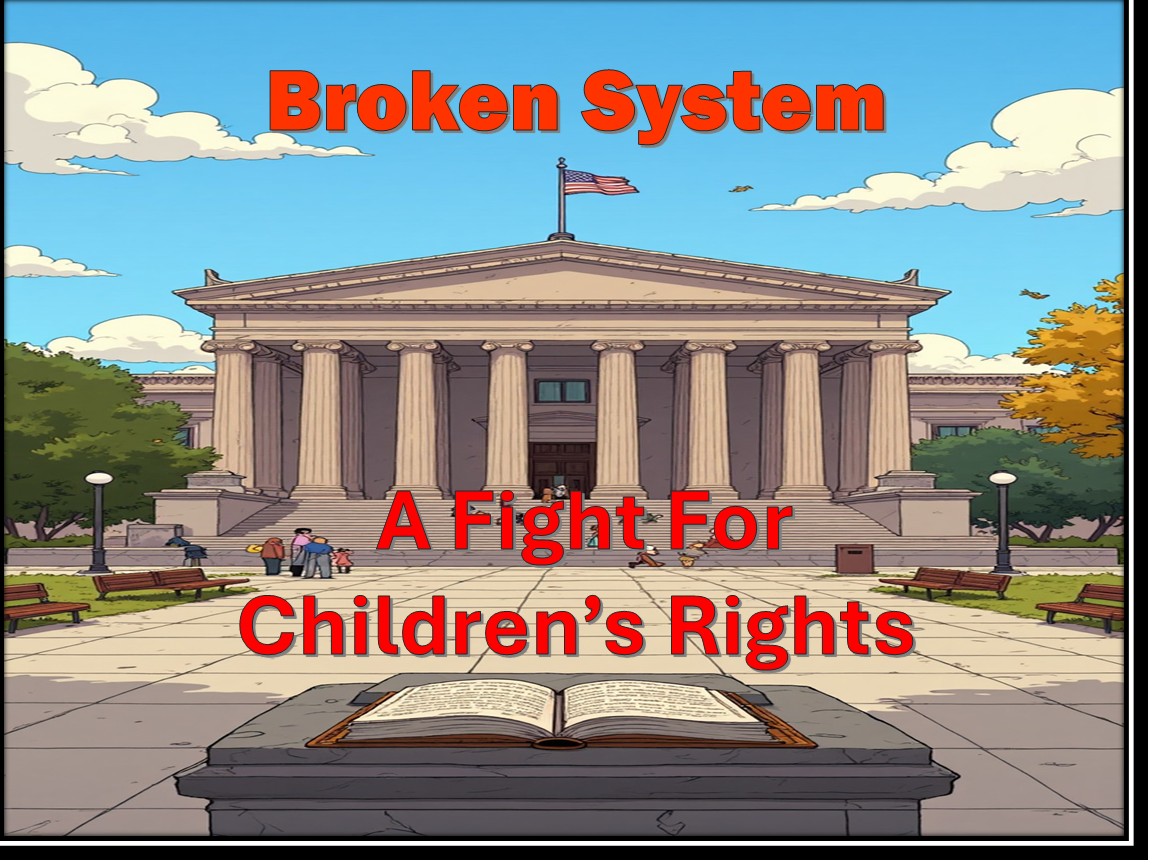
Ultimately, promoting the right to be heard and advocating for participatory rights is crucial for ensuring that children’s voices are recognized and respected in society, reinforcing their status as individuals with rights and opinions worthy of consideration. See video, Broken System, A fight for Children’s Rights.
“Law is largely a tool to regulate interpersonal relationships and spiritual practice is about organizing personal life. No law or legal system can be conceived like a mechanical system devoid of spirituality. Law, divorced from spirituality, does not address the fundamental issues of society rather it keeps on compiling cosmetic solutions, which appear to be superficial medicines against the structural maladies. Unfortunately, the origin of conflict too is often ignored by law and legal system.”
The purpose of law is justice which should have a higher spiritual quotient.
“Spirituality has the potentiality to identify and remove the root cause of conflicts.”
“When judges and lawyers infuse spiritual values in enforcing laws, we could aim to achieve a better society.”(Taken from, Exploring the Bonds Brochure BY: CAMPUS LAW CENTRE IN COLLABORATION WITH ETHIC CRAFT CLUB UNIVERSITY OF DELHI August 2021)
The Foundation of the Rule of Law
In Marbury v. Madison: 5 US 137 (1803) it is stated that “The government of the United States has been emphatically termed a government of laws, and not of men. It will certainly cease to deserve this high appellation, if the laws furnish no remedy for the violation of a vested legal right.”
Marbury v. Madison, decided by the United States Supreme Court in 1803, is a landmark case that laid the foundation for the principle of judicial review in the American legal system. This case arose in the context of a fierce political struggle between the Federalists and the Democratic-Republicans during the early years of the United States. At the center of the dispute was William Marbury, a Federalist appointed as a justice of the peace in the District of Columbia by outgoing President John Adams. However, his commission was not delivered before Thomas Jefferson assumed the presidency, leaving Marbury’s appointment in legal limbo.
The key players in this historic case included Chief Justice John Marshall, who presided over the Supreme Court, and then-Secretary of State James Madison, who was responsible for withholding the commission. Marbury’s insistence on obtaining the commission led him to file a writ of mandamus, a court order compelling Madison to act in accordance with the law. This confrontation was not just about Marbury’s appointment but also highlighted the broader implications for the balance of power between the different branches of government.
One of the significant contributions of Marbury v. Madison is the establishment of judicial review, a crucial aspect of American jurisprudence that empowers the judiciary to invalidate laws and executive actions that are inconsistent with the Constitution. This case set a precedent that underscored the role of the Supreme Court as a co-equal branch of government, responsible for interpreting the law and ensuring that the Constitution remains the supreme law of the land.
Overall, Marbury v. Madison represents a pivotal moment in the development of the rule of law in the United States. It underscores not only the complexities and limitations inherent in the political landscape of the time but also the enduring framework within which American governance operates today.
The Importance of a Government of Laws
The principle of a ‘government of laws and not of men’ is foundational to the establishment of a democratic society where the rule of law prevails over the whims of individuals. This concept asserts that every citizen, including government officials, is subject to the law. Thus, it ensures that laws are applied consistently and fairly, promoting justice and protecting individual rights. The significance of this principle cannot be overstated, as it serves as a cornerstone for both the legitimacy of government and the protection of civil liberties.
In essence, a government bound by laws creates an environment where power is neither arbitrary nor unchecked. It holds that laws must be transparent, accessible, and applicable to all members of society. This is critical for maintaining social order and establishing trust between citizens and the state. When laws are upheld consistently, citizens are more likely to respect the social contract that governs their interactions and relationships within the community.
The landmark case of Marbury v. Madison (1803) exemplifies how the principle of a government of laws functions in practice. By establishing the precedent of judicial review, this case reinforced the judiciary’s role in interpreting the law and ensuring that government actions comply with the Constitution.
This judicial check is crucial for maintaining legal rights and remedies, allowing courts to invalidate actions by the executive or legislative branches that may infringe upon individual freedoms. As a result, Marbury v. Madison not only cemented the importance of law in governance but also emphasized the necessity for an independent judiciary to uphold and defend constitutional principles.
Key Legal Principles Established
The landmark Supreme Court case of Marbury v. Madison, decided in 1803, established several critical legal principles that continue to influence the American legal landscape. Primarily, it introduced the concept of judicial review, which allows the judiciary to invalidate laws and executive actions that are found to be in conflict with the Constitution. This principle serves as a cornerstone of the rule of law, ensuring that no one is above the law and that governmental powers remain in check.
Judicial review created a vital balance of power among the three branches of government: the legislative, the executive, and the judiciary. By asserting its authority to interpret the Constitution, the Supreme Court positioned itself as a key arbiter in disputes regarding governmental authority and individual rights. This function not only protects civic liberties but also fosters a legal environment where laws must adhere to constitutional standards.
Furthermore, Marbury v. Madison underscores the importance of procedural justice by illustrating that individuals have a right to seek remedies through the courts when their rights are infringed upon. William Marbury’s petition exemplifies the struggles individuals face when government actions appear to circumvent established legal protocols. As a result, this decision emphasizes the judiciary’s role in safeguarding personal rights against potential governmental overreach, thereby reinforcing the need for an independent judicial system.
The implications of these principles extend beyond the confines of the early 19th century, shaping contemporary interpretations of law and governance. The principles established in Marbury v. Madison continue to resonate today, as they serve as a reminder of the necessity for accountability within the government and the enduring importance of an independent judiciary in preserving democracy and individual liberties.
Impact and Legacy of the Ruling
The 1803 Supreme Court case, Marbury v. Madison, has profoundly influenced American jurisprudence and remains a cornerstone in the study of constitutional law. Its declaration of judicial review established the principle that courts have the authority to invalidate laws and executive actions that violate the Constitution. This pivotal ruling has significantly shaped the balance of power within the U.S. government, reinforcing the judiciary’s role as a guardian of the Constitution.
One of the enduring legacies of Marbury v. Madison is its impact on the relationship between the legislative and judicial branches. The decision empowered the courts, ensuring they can serve as a check on legislative and executive actions, thus preserving individual rights and liberties. This function of the judiciary has become even more crucial in contemporary legal contexts, where issues of civil rights, environmental regulations, and executive power often arise. The precedent set by Marbury has equipped judges to interpret the Constitution actively and assert their independence from other branches of government.
Moreover, Marbury v. Madison has been cited in numerous landmark cases, reinforcing its relevance in ongoing legal debates. The ruling has been referenced in discussions surrounding the scopes of governmental power, the extent of federal authority, and the protections afforded by the Constitution. As society evolves, the principles established in this case continue to guide judicial reasoning and decision-making, ensuring that the rule of law is upheld.
In contemporary America, the effects of Marbury v. Madison are observable in landmark decisions regarding health care, immigration, and civil rights, demonstrating its lasting influence. As debates over the limits of governmental power persist, the case remains a crucial point of reference. Its foundational role in establishing the judiciary’s authority ensures that the impact of Marbury v. Madison will endure, affecting both law and governance for generations to come.
Custodial Interference or Kidnapping: A Father’s Fight
Understanding Custodial Interference
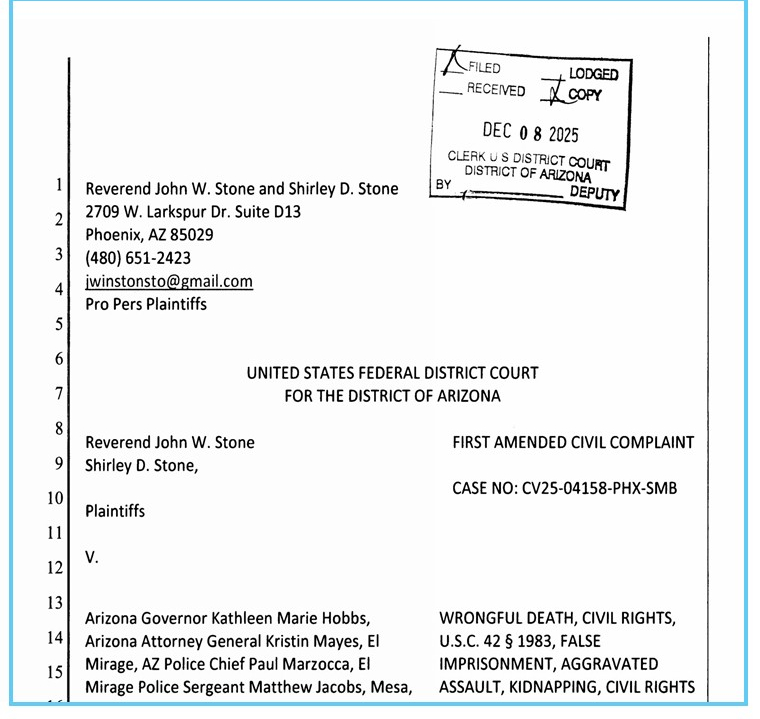
In the Stone’s ongoing legal proceedings highlighted in the complaints, an alarming factor emerged: a communication from the chief of police, which indicated that the authorities decided that the case was not kidnapping but custodial interference, and they would not intervene in his circumstances. This raises serious questions regarding the adherence to statutory obligations and the processes followed by police in such delicate cases.
Custodial interference is a legal term that refers to the act of one parent unlawfully retaining or taking a child from the legal custody of the other parent. It is important to distinguish custodial interference from kidnapping; while both involve the unlawful taking or retention of a child, kidnapping typically implies a malicious intent to harm or exploit the victim as well as the unlawfully retention of the child. In contrast, custodial interference often arises from disputes pertaining to custody agreements, where one parent may feel justified in their actions, despite violating the other parent's legal rights.
Custodial interference usually involves violating a custody agreement (like keeping a child longer than allowed or taking them without permission), while kidnapping is the unlawful taking and restraint of a person with intent to harm, hide, or deny access. Custodial interference is often a misdemeanor; kidnapping is always a felony.
Implication of Having a Court Order
In the Stone's claims they provided copies of court orders; the paternity order, the conditions for custodial rights, and the protection orders, all indicating full custodial rights of the father. The mother ignored those orders and took the children in violation.
The implications of having a protective order in place significantly influence instances of custodial interference. Such orders are designed to protect custodial parents and their children, particularly in cases where there is a history of child abuse, domestic violence, or threats. When a protective order is issued, it clearly outlines the custodial rights of the primary caretaker, asserting that any attempt by the other parent to contravene those rights may result in legal consequences. Unfortunately, the vulnerable adult custodial parents must constantly navigate the emotional and legal ramifications of non-compliance from the other parent, which can lead to significant distress.
The Father's Battle: A Timeline of Events
The heartbreaking story of a father's struggle to secure the safety and return of his children unfolds through a series of harrowing events. The timeline begins with the father experiencing a diabetic episode that led to his admission to a medical facility. This medical crisis left him vulnerable, highlighting the necessity for a proactive approach by law enforcement to safeguard his civil rights and the rights of his children. Despite a protective order in place, which should have served as an assurance against potential kidnapping or custodial interference, the situation escalated. Upon his release from medical care, the father was met with the devastating news that his children had been taken by their mother.
The abduction occurred in a shocking violation of the protective order designed to safeguard both the father and the children. The father's immediate attempts to reach out to the authorities were met with obstacles that further compounded his distress. It became evident that the mandatory duty of police in such sensitive circumstances was not adequately executed, as the father faced significant challenges in asserting his rights. He navigated a series of interactions with law enforcement, expressing concern not only for his children’s safety but also for the possible implications of child abuse and neglect due to the mother’s actions.
As days turned into weeks, the father remained steadfast in his pursuit of justice. He diligently documented each encounter, carefully noting the responses from authorities who seemed to not care to take decisive action. The father also reached out to various support organizations aimed at protecting vulnerable adults and children, seeking assistance in response to the civil rights violations he and his children faced. This challenging timeline serves as a stark reminder of the critical role that law enforcement must play in preventing such distressing situations and ensuring the well-being of families embroiled in custody disputes.
The Role of Law Enforcement: Response and Accountability
The duty of police encompasses a broad range of responsibilities, particularly in responding to incidents involving vulnerable individuals such as children. In this case of custodial interference, the law enforcement's response raises significant questions regarding their decision-making process when labeling the incident. The classification of the situation as custodial interference, rather than a direct act of kidnapping, indicates a tendency to downplay the severity of the offenses involved, which can have dire consequences for the children involved. Custodial parents often expect police to act decisively in retrieving their children and enforcing protective orders, yet in this instance, such enforcement was lacking.
When police encounter situations involving custodial disputes, there exists an expectation of swift action, particularly in scenarios where the safety of a vulnerable adult or a minor is at risk. Not only does the immediate intervention serve to protect the rights of the custodial parent, but it also contributes to ensuring that civil rights violations do not occur. A failure to act can inadvertently perpetuate child abuse and further the cycle of custodial interference, leaving victims vulnerable and without recourse. Legal experts emphasize that in circumstances warranting intervention, it is the mandatory duty of police to enforce protective orders rigorously and swiftly to avoid tragic outcomes.
Arizona Revised Statute 8-901
According to Arizona Revised Statute 8-901, law enforcement officers are required to take specific actions when allegations of custodial interference or kidnapping arise. This statute establishes a mandatory duty, indicating that police cannot simply choose to refrain from assisting in cases where custodial rights are jeopardized. In the context of a recent wrongful death lawsuit and certified criminal complaint, this duty becomes particularly critical.
Arizona Revised Statutes under Title 8 for Child Safety states under ARS § 8-901 for missing, kidnapped or runaway children, provides that:
A law enforcement agency that receives a report of a missing, kidnapped or runaway child shall do all of the following:
Within two hours after receiving the report and all necessary and available information, submit the following information to the Arizona crime information center, the national crime information center computer networks and the national missing and unidentified persons system:
(a) The name, date of birth, sex, race, height, weight and eye and hair color of the child.
(b) A recent photograph of the child, if available.
(c) The date and location of the last known contact with the child.
(d) The category under which the child is reported missing.
Not later than thirty days after the original entry of the record, verify and update the record with any additional information, including, where available, medical and dental records and a photograph taken during the previous one hundred eighty days.
Institute or assist with appropriate search and investigative procedures.
Maintain a close liaison with state and local child welfare systems and the national center for missing and exploited children for the exchange of information and technical assistance in the missing child case.
Grant permission to the national crime information center terminal contractor for this state to update the missing child record in the national crime information center computer networks with additional information that is learned during the investigation and that relates to the missing child.
A law enforcement agency that receives a report of a missing, kidnapped or runaway child who is in the foster care system shall notify the national center for missing and exploited children in addition to the entities listed in subsection A of this section.
An entry may not be removed from any database or system until the child is found, or the case is closed.
When law enforcement dismisses their mandatory duties as outlined in statute 8-901, the implications of law enforcement's inaction are profound, as they not only affect the immediate situation but can also set a precedent for future cases of custodial disputes. By examining the systemic failures within law enforcement responses to cases of custodial interference and kidnapping, a clearer understanding emerges regarding the need for accountability in protecting civil rights.
A Tragic Conclusion Calls for Reform
The painful experience faced by the father in this gripping case serves as a somber reminder of the broader implications stemming from police inaction. As he fought desperately to regain custody of his children, the emotional toll on not just him but the entire family was profound. The journey toward battling what many perceive as a mandatory duty of police to protect children's rights unfortunately oftentimes leads to feelings of abandonment and despair among family members caught in the crossfire of custody disputes.
Unfortunately, the culmination of this fight ended tragically, as the father ultimately lost not only his children but also his life due to the overwhelming emotional distress. This heartbreaking outcome starkly highlights the inadequacies present within the current system regarding custodial interference and the subsequent inability to protect the most vulnerable—the children. The case raises pressing questions about the effectiveness of law enforcement's response to kidnapping instances and civil rights violations that exceedingly occur in this context. Are the police equipped and properly trained to handle such sensitive situations, especially when they involve vulnerable adults and the dynamics of child abuse? Do they care?
This tragic conclusion has inspired a clarion call for substantial reform in how custodial interference cases are approached. It underscores the need for a major reevaluation of existing policies and the implementation of better training for law enforcement officers tasked with enacting the mandatory duty of police. Stakeholders must engage in open conversations surrounding policy changes that can prevent such tragedies from recurring. A more compassionate and informed approach is essential to better protect children's rights and ensure that families are supported during these emotionally charged conflicts. See, Understanding 'Shall' and 'May' in Child Safety Legislation
February 28, 2024, Timothy celebrated his 34th birthday, and on March 2, 2024, he suddenly passed away.
Met in high-school, Timothy had been with Sarea, for over 15 years. They married and had three-boys; the two youngest are autistic. Timothy worked for Cox Communications for almost 12-years. At the time of his death, he worked as a sales Engineer team leader and was highly regarded by his peers and superiors as having an advancing career with Cox. He loved family life, music, sports and cooking. During the age of two, Timothy developed juvenile (type 1) diabetes. Autopsy report says he died of the condition.
It was around 4pm, after being treated and recovering from a diabetic episode, and discharged from the hospital’s Intensive Care Unit when Timothy returned home and found his three sons missing. They were taken away by the sitter who refused to tell him at first where they were. He immediately called the El Mirage, AZ Police. When the officers arrived to take the report, they were told by the sitter that she took them to their mother, but her location was unknown. The mother had abandoned the family and had been living in Las Vegas for nearly a year and had obtained a job there. Timothy did not know his estranged wife was back.
From the time Timothy called 911 until his death, his basic rights as a citizen were trampled upon, as he was denied the fundamental protection he deserved as a custodial parent. Instead of finding support, he was met with indifference and obstruction, leaving him and his children exposed and defenseless. The relentless torment he endured, coupled with the blatant disregard for his and his children's safety, tragically led to his untimely demise.
Summary of Events
Wife's Abandonment & Protective Orders
Timothy and wife Sarea were working out a divorce.
Sarea was agreeable and amicable for months during the process but changed her mind and decided to make the process difficult.
Sarea abandoned the family and moved to Las Vegas for nearly a year.
Timothy sought an order of protection for him and children, due to her manipulative and harmful actions, including using the children against him and falsely accusing him of abuse.
Sarea evaded being served with Timothy’s protective order, though her sister was served.
False Accusations & Court Decisions
Previously, Sarea falsely claimed Timothy was abusive to obtain a protective order against him, putting him out of their home.
In a later hearing, she admitted he never hurt her, leading the judge to reunite him with the children while keeping the order for her.
Eventually, Sarea had the order against Timothy for her dismissed in March 2023.
Wife’s Erratic Behavior & Final Departure
After the dismissal, Sarea sent the two older boys to live with Timothy at different times and, in March 2023, brought the youngest child to his home.
She stayed briefly before stealing the family car and fleeing to Las Vegas, leaving the children behind.
When Timothy attempted contact, Sarea’s mother and sister threatened him and plotted to take the children back.
Legal & Custodial Struggles
Since Sarea had abandoned the children, Timothy legally had full custody and had obtained protective orders against her and her sister.
Despite this, Sarea ignored the orders and continued causing issues from Las Vegas without concern for the children.
Potential Conspiracy with the Friend-Sitter
Believing they were moving toward an amicable divorce, Timothy later realized Sarea may have been secretly conspiring with the sitter.
The sitter, whom Timothy had relied on to help care for the children, had her own struggles but maintained ties to both him and Sarea, even during their conflicts.
Temporary Living Arrangement Turns Toxic
Timothy allowed the friend-sitter and her children to stay in his apartment temporarily while he was working out the divorce.
The friend-sitter became increasingly demanding and manipulative, prioritizing her children over his, creating conflict and emotional distress.
Legal Action & Escalation
In January 2024, Timothy sought legal action to remove the sitter due to her toxic behavior and threats.
His request for a protective order was denied, leaving him vulnerable.
Mysterious Health Decline & Hospitalization
After his legal efforts failed, Timothy experienced a sudden unexplained stomach illness.
His insulin went missing, and he was later hospitalized with dangerously high blood sugar levels.
Children Taken While Hospitalized
While Timothy was in intensive care, Sarea, unexpectedly returned and, with the help of the friend-sitter, took the children without his authorization or knowledge.
Sarea had abandoned the children for nearly a year but was in contact from with the sitter regarding Timothy’s life insurance policy.
Police and Legal System Failures
Timothy reported the abduction, but police failed to act, despite his existing protective order against Sarea.
Sarea managed to evade service of the protective order and, before being served, and tried to serve her own against Timothy to prevent him from retrieving the children.
Tragic Outcome
Timothy was headed to court to have his children returned, but before the case was resolved, he suddenly passed away.
His Timothy's court filings stated that Sarea had mental health issues, had abused and neglected the children, defied court orders and took and kept them purely to hurt him.
Despite his death, the system failed to acknowledge his case, leaving the children in a potentially harmful environment, now without their father's protection.
Systemic Negligence & Lack of Justice
Authorities ignored Timothy’s parental rights and protective orders, allowing his estranged wife to keep the children, illegally taken.
His vulnerability as a lifelong Type-1 diabetic was used against him, leading to emotional and physical suffering.
His tragic end highlights systemic failures, lack of accountability, and continued abuse inflicted upon his children.
We have spent 5,000 hours doing the work the police refused to do. We have uncovered a 'Counterfeit Order' enterprise where the Law is… Read more: The “Equal Justice” Poll
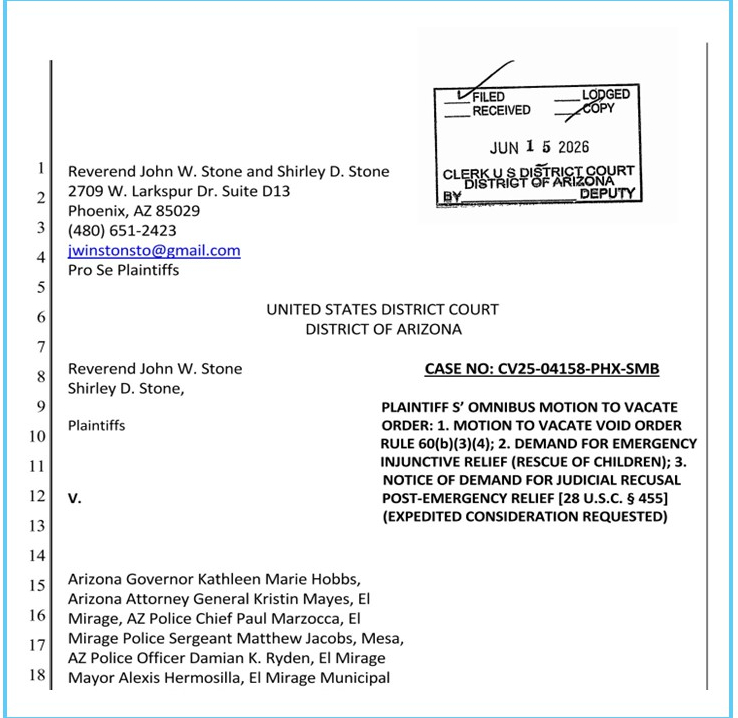
In response to Judge Brnovich’s May 28, 2026, order, we, the plaintiffs filed a "Motion to Vacate the Order" on the grounds that the… Read more: Theft of the Jury
A Public Warning About Judicial Immunity, Civil Rights, and Access to Justice This article is written for a general audience and summarizes legal arguments… Read more: When Court Procedures Become a Shield
During the late 18th century, the political landscape was charged with debates about governance, individual rights, and the responsibilities of citizenship. The framers of… Read more: The Spiritual Meaning of ‘We the People’
Taken from the Declaration of Independence para. 2 (U.S. 1776); it was declared, “…all men are created equal, that they are endowed by their… Read more: The Equality of Men and Law






 It IS possible that the deliberate nonaction is connected to Timothy’s parent’s public stance in opposition to corrupt governmental practices? For the past 25… Read more: Could Timothy’s Demise Be Linked to Parents’ Past?